Poster Presentation Australasian Melanoma Conference 2026
Paradoxical rapid-onset eruptive cutaneous squamous cell carcinomas during vemurafenib therapy with concurrent tumor response and regression after drug withdrawal in advanced BRAF-mutated melanoma (#425)
Background/Aim:
BRAF inhibitors, including vemurafenib, have significantly improved outcomes in patients with advanced melanoma harboring BRAF V600 mutations. However, paradoxical activation of the MAPK pathway may induce the development of secondary cutaneous neoplasms. We report a case of rapid-onset eruptive cutaneous squamous cell carcinomas (cSCCs) and keratoacanthomas occurring concomitantly with clinical tumor response.
Methods:
Clinical, chronological, and histopathological data were collected from a patient with advanced melanoma undergoing targeted therapy, with emphasis on temporal association and dermatological findings.
Results:
A 53-year-old female patient was diagnosed with stage IIIC (pT4aN3bM0) BRAF V600E-mutated cutaneous melanoma in the left inframammary region, with a Breslow thickness of 8.1 mm. Following surgical treatment and lymph node dissection (7/21 positive lymph nodes), disease progression occurred, with cutaneous recurrence and liver metastases, despite treatment with immunotherapy and chemotherapy.
Treatment with vemurafenib was initiated, resulting in clinical benefit, including pain reduction and decreased bleeding and size of the inframammary and left axillary metastatic lesions.
Approximately 40 days after treatment initiation, multiple erythematous papules and nodules with central hyperkeratosis developed, distributed across the trunk and lower limbs. The largest lesion, measuring 3 × 3 cm on the right upper back (posterior shoulder region), was excised, with histopathological confirmation of well-differentiated cSCC associated with a foreign body-type giant cell reaction to keratin pearls, with clear margins and no perineural or lymphovascular invasion.
Due to significant cutaneous toxicity, treatment was discontinued, leading to marked regression of the lesions, with only two residual lesions remaining.
Conclusion:
This case demonstrates the paradoxical development of rapid-onset eruptive cSCCs and keratoacanthomas during vemurafenib therapy, occurring concomitantly with tumor response and regressing after treatment discontinuation. These findings reinforce the role of paradoxical MAPK pathway activation and highlight the importance of close dermatological surveillance in balancing therapeutic benefit and cutaneous toxicity.
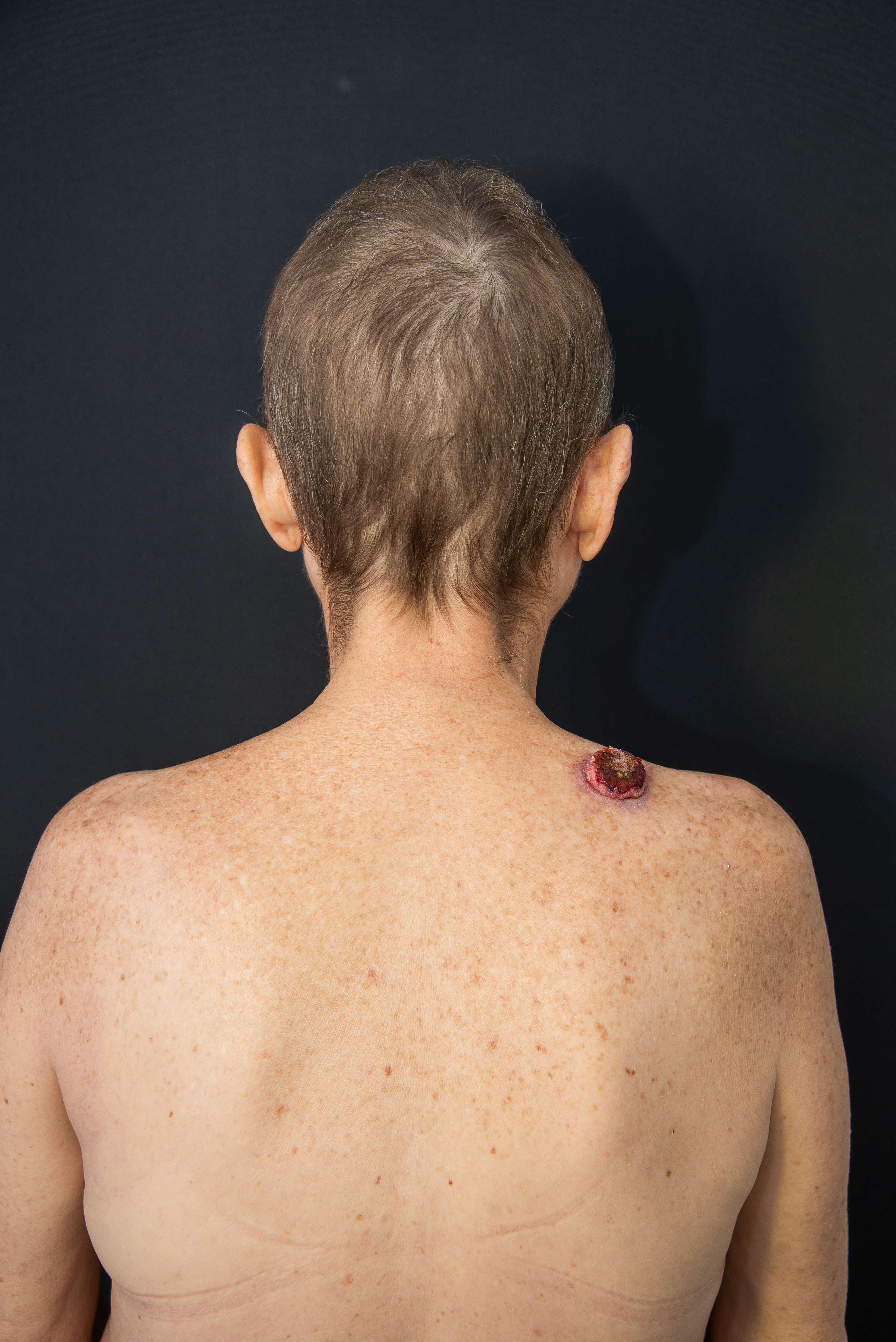
Figure 1. Ulcerated hyperkeratotic nodule (3 × 3 cm) on the right upper back (posterior shoulder region), representing cutaneous squamous cell carcinoma arising during vemurafenib therapy in a patient with advanced melanoma.