Poster Presentation Australasian Melanoma Conference 2026
Five Years of a Visible Nail Melanoma: Implications for Public Awareness and Early Detection (#424)
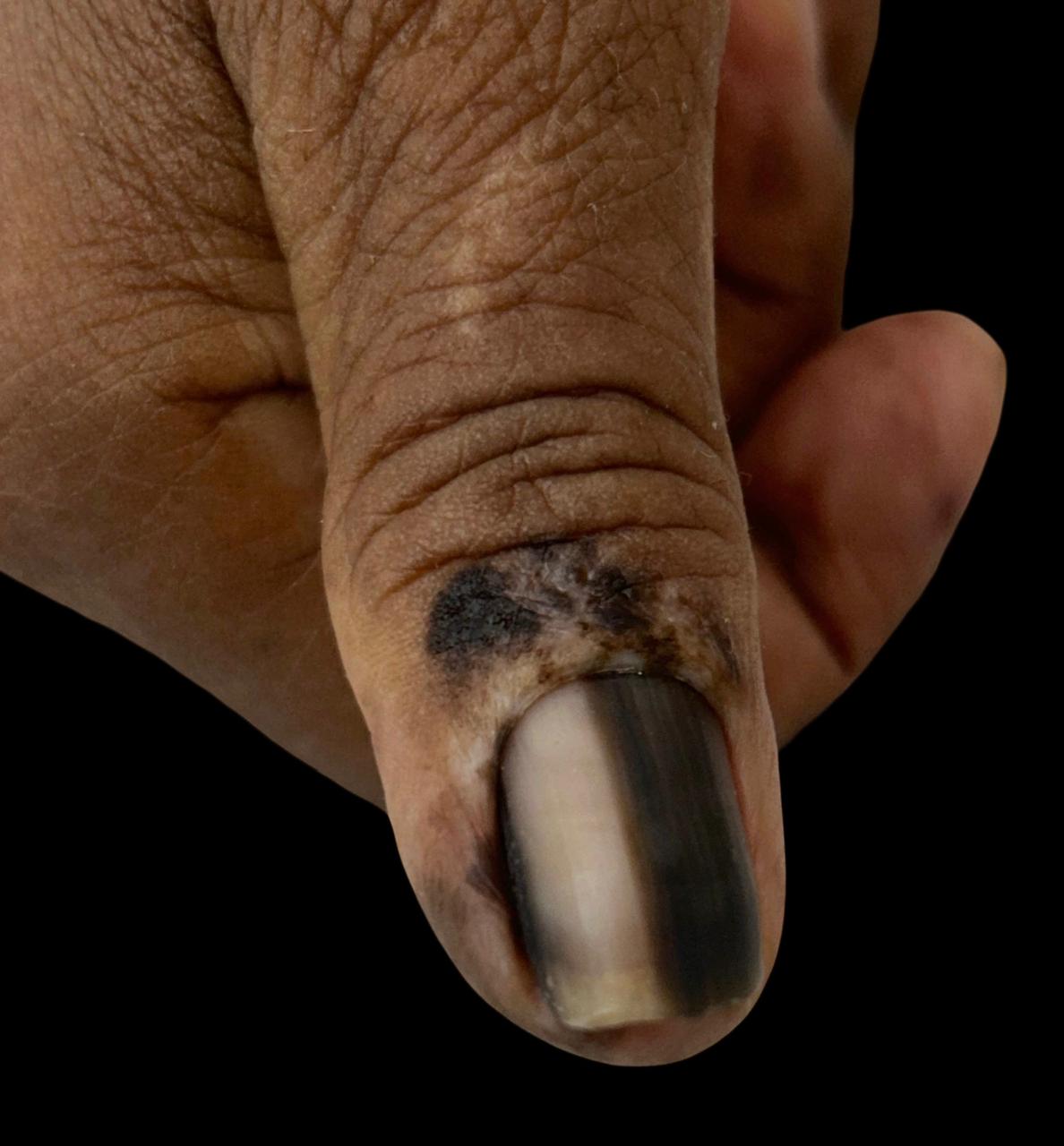 Background/Aim: Nail apparatus melanoma is a rare subtype of acral melanoma frequently associated with delayed diagnosis. While subtle presentations may contribute to diagnostic delay, even clinically evident lesions may remain unrecognized. We report a case of invasive acral melanoma with overt clinical features that remained undiagnosed for years.
Methods: A 74-year-old woman was evaluated during hospitalization for orthopedic conditions. During assessment by the treating team, a suspicious nail lesion was identified, prompting dermatologic consultation. The patient reported a five-year history of a progressively enlarging pigmented lesion on the right thumb nail and had not previously sought medical attention for evaluation of this nail lesion.
Results: Examination of the right thumb revealed longitudinal melanonychia involving approximately 50% of the nail plate, with clear extension of pigmentation to the proximal and lateral nail folds, consistent with the Hutchinson sign. The lesion was clinically evident and easily appreciable on inspection. The patient denied local symptoms. No palpable lymphadenopathy was detected. The lesion was excised with 2-mm margins. Histopathological analysis confirmed invasive acral melanoma (Breslow thickness 0.4 mm, ulceration present, Clark level II, mitotic rate of 0/mm²), staged as pT1b, with free surgical margins.
Conclusions: This case highlights that even clinically evident nail apparatus melanoma may remain undiagnosed for prolonged periods. Recognition of suspicious nail findings is essential, even in non-dermatologic settings. Broader efforts to enhance health literacy and strengthen clinical training are essential to reducing diagnostic delay and improving outcomes.