Poster Presentation Australasian Melanoma Conference 2026
Regression of Benign Melanocytic Naevi Following Immunotherapy: Regimen-Specific Differences and Implications for Ongoing Surveillance (#429)
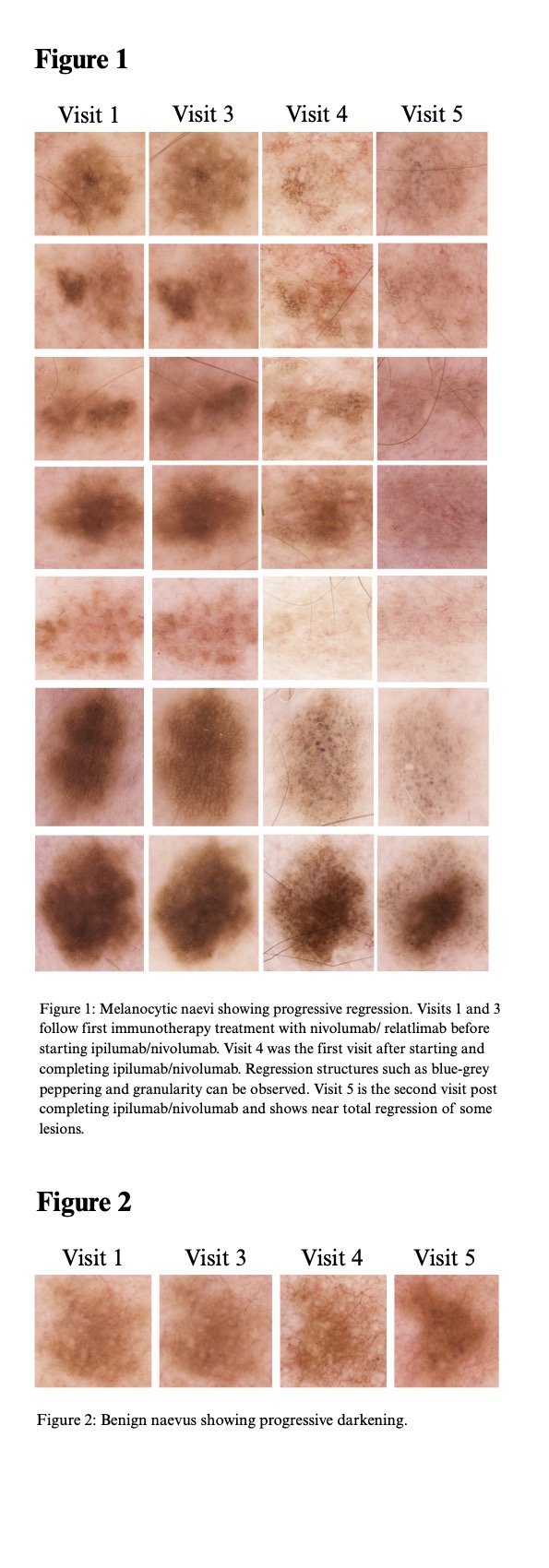
Regression of benign melanocytic naevi has been described in patients receiving immune checkpoint inhibitor (ICI) therapy for melanoma. We report the case of a 71-year-old man with metastatic NRAS-mutant melanoma who developed near-complete global regression of benign naevi and solar lentigines during two courses of ICI therapy. Serial imaging from a prospective skin surveillance study demonstrated a more pronounced degree of regression following ipilimumab plus nivolumab compared with an earlier course of relatlimab plus nivolumab.
Quantitative analysis using dermoscopy explainable intelligence (DEXI) scores across 18 lesions imaged at five visits supported this observation, with greater absolute changes in lesion characteristics, including diameter, contrast, border colour variation and hue, following ipilimumab/nivolumab, despite a shorter imaging interval. During this period, two naevi demonstrated paradoxical darkening; histopathological assessment identified one lesion as melanoma in situ and the other as a lichenoid keratosis.
These findings suggest that different ICI regimens may exert variable effects on benign melanocyte regression. They also highlight the importance of biopsy for lesions that do not follow the overall pattern of regression in patients undergoing immunotherapy.
(Please note that at the time of submission, I was unable to access the most up-to-date dermoscopy images to illustrate the sequential darkening of the melanoma lesion. The figure will be updated prior to presentation to include the complete sequence of images. The melanoma lesion demonstrating progressive darkening will be presented as Figure 3)