Poster Presentation Australasian Melanoma Conference 2026
Implementation of total body photography for skin cancer early detection: A systematic review (#313)
Advances in imaging technologies, such Total Body Photography (TBP), and the increasing capabilities and use of artificial intelligence (AI) have the potential to enhance skin screening and skin cancer surveillance, especially among individuals at elevated melanoma risks. Although research evaluating TBP systems and AI is expanding, there’s limited focus on how these technologies are implemented and integrated into clinical practice across different healthcare settings.
This review examined the literature regarding the implementation and utility of TBP technologies over time. A systematic search identified 36 studies published from inception through to July 2025, that described TBP use, associated workflows and work processes, workforce roles, and reported facilitators and barriers. Findings were synthesised using a narrative synthesis approach due to heterogeneity in study designs, objectives, and reporting quality.
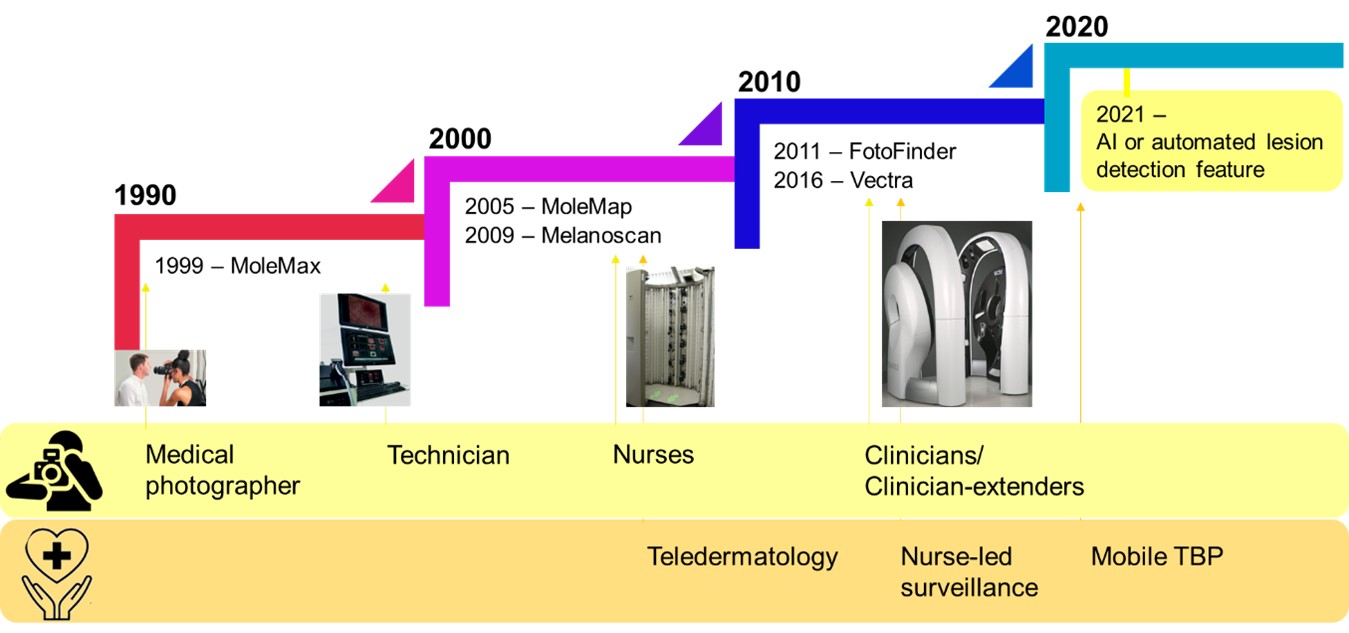
Only six of the 36 studies reported aspects of implementation, including feasibility of replicating TBP protocols across healthcare settings, descriptions of practical TBP use, or user perceptions of TBP technologies and/or AI-enabled features. However, none applied a formal implementation science framework. Across the literature, technological advancements were increasingly evident, with studies describing digitally enabled or automated TBP systems and AI-supported features that facilitates image acquisition, image comparison, and clinical decision-making. Despite the observed technological shift, descriptions of TBP work process were relatively consistent across studies. These developments may reduce the technical complexity of conducting TBP-aided skin examinations. For example, several studies demonstrated that non-specialist healthcare professionals could feasibly conduct TBP-aided skin examinations. These reports indicate that TBP may have the potential to reduce reliance on specialist expertise for image acquisition and allow TBP to be embedded within a wider range of care models. Collectively, the changes over time evidenced by this review show a gradual evolution towards flexible, decentralised, and scalable TBP delivery models, with opportunities for TBP to be integrated into different clinical and potentially resource-constrained settings.