Poster Presentation Australasian Melanoma Conference 2026
Safety and Feasibility of Exercise for People Receiving Immune Checkpoint Inhibitors for Melanoma: Protocol of the Randomised Controlled EXHIBIT Study (#330)
Background:
Immune checkpoint inhibitors (ICIs) have substantially improved outcomes for people with melanoma and are playing an increasingly important role within cancer care. However, their use is frequently accompanied by immune-related adverse events (irAEs), which can affect treatment adherence and impair patients’ wellbeing. Exercise is widely recognised as a safe and beneficial supportive care intervention, improving physical and mental wellbeing, and helping manage treatment-related side effects for people with cancer. Yet, evidence investigating exercise during ICI treatment remains limited. The EXHIBIT Study investigates the safety and feasibility of a multimodal exercise program delivered concurrently with ICI therapy for people with melanoma.
Methods:
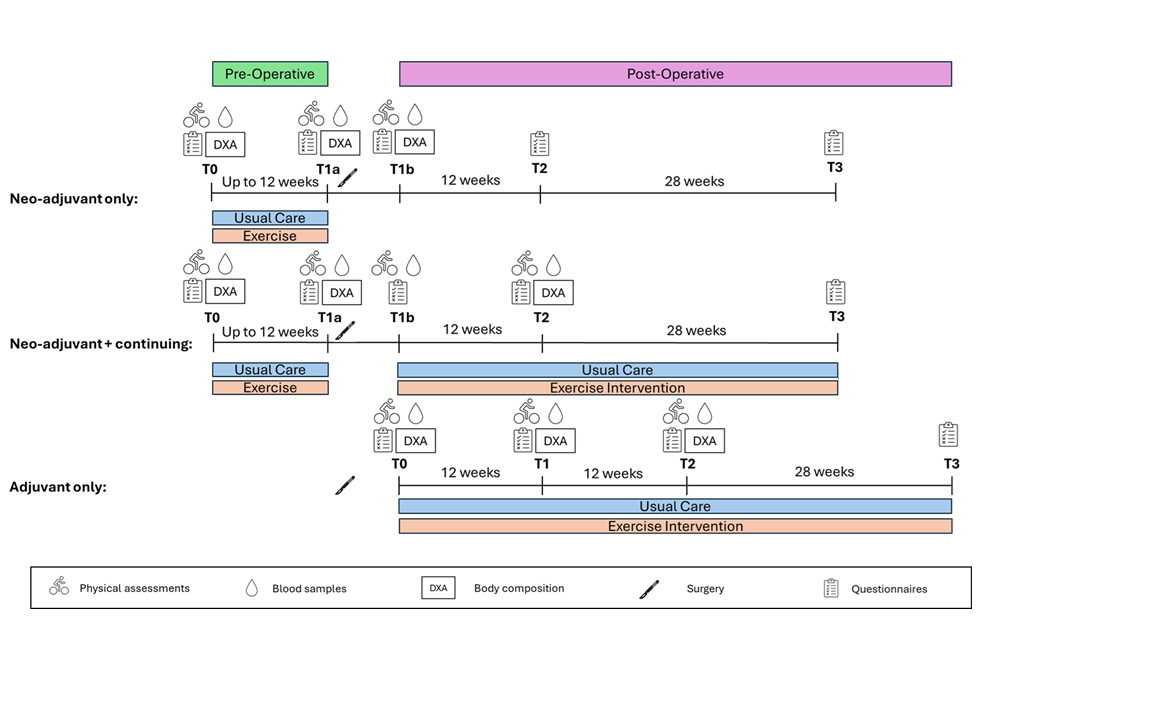
The EXHIBIT Study is a prospective, two-arm randomised controlled trial, aiming to recruit 50 participants with stage II/III cutaneous melanoma who are commencing ICIs, and are not meeting the current exercise guidelines for people with cancer. Participants are randomised (1:1) to either a structured exercise intervention delivered concurrently with ICI treatment or usual care, stratified by neoadjuvant versus adjuvant and single-agent versus combination ICIs. Both groups receive general exercise guidelines, a physical activity tracker, and resistance bands. The intervention comprises a semi-supervised multimodal exercise program performed three times per week, with supervised sessions delivered in-person or via videoconferencing. Assessments are scheduled according to each participant’s treatment pathway and include questionnaires, body composition scans, blood sampling, physical function and fitness testing, and medical record extraction. Primary outcomes are safety, including exercise-related adverse events and severe irAEs, and feasibility, including recruitment, retention, attendance, and adherence.
Results:
Recruitment commenced in June 2025 for patients receiving adjuvant ICI treatment. Following the listing of neoadjuvant ICI treatment for melanoma on the Pharmaceutical Benefits Scheme, the protocol was amended to expand eligibility, and recruitment of these participants commenced in October 2025. As of March 2026, 19 people have been referred, and five have been randomised, with recruitment ongoing.
Conclusions:
The EXHIBIT Study will provide preliminary evidence on the safety and feasibility of exercise delivered concurrently with ICI treatment for melanoma. These findings will inform the design of future trials investigating the efficacy of exercise as a supportive care strategy in the immunotherapy setting.